 Regulated firm
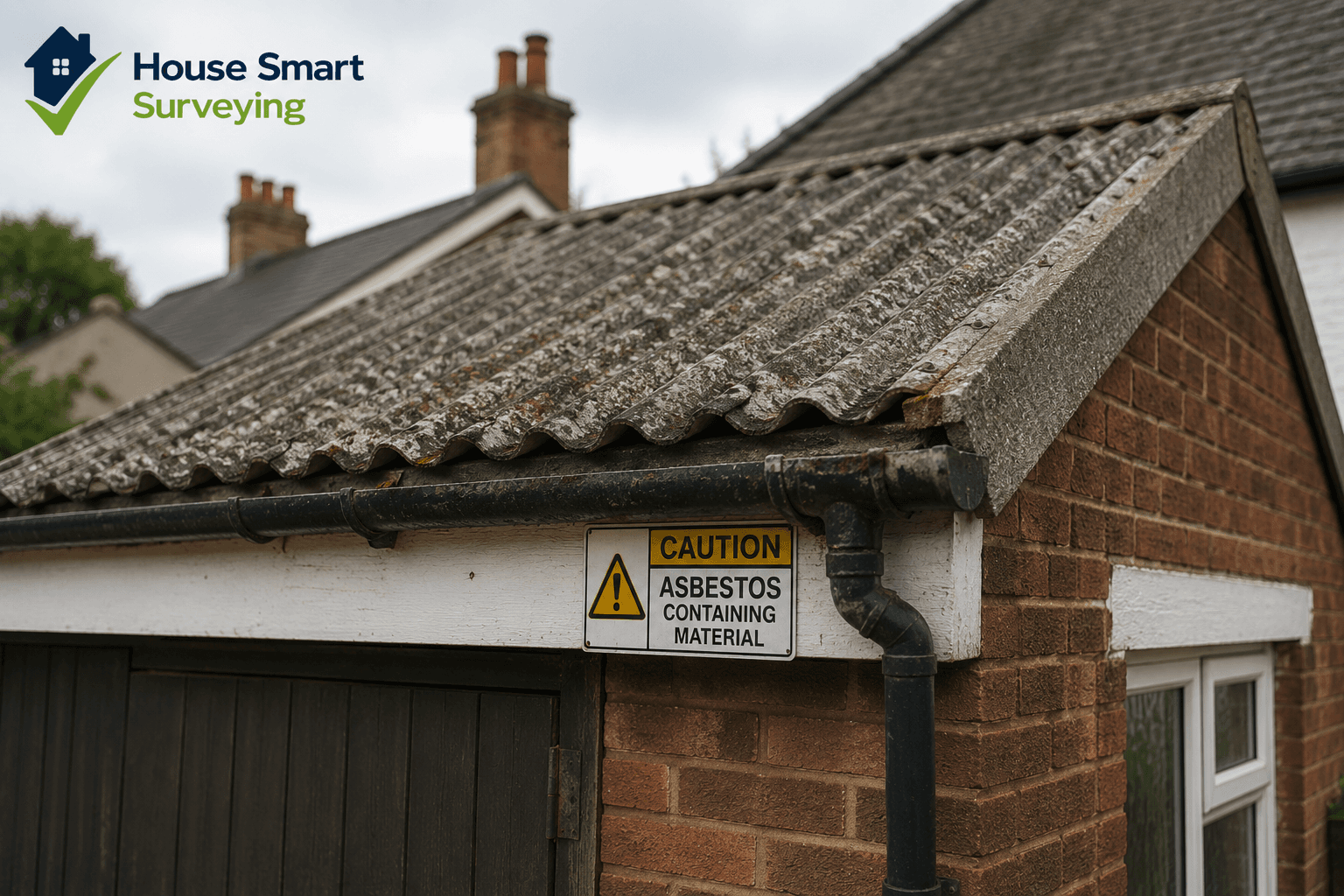
Asbestos in UK homes: what a surveyor looks for
Until the full ban in 1999, asbestos was a commonly used material across the UK construction industry: in roof tiles, soffits, floor tiles, textured coatings, insulation, cement products, and around older boilers and flues. It has since been deemed hazardous to health, and disturbing it releases microscopic fibres that cause serious and irreversible lung disease.
In properties built or refurbished before 2000, the sensible working assumption is that asbestos-containing materials (ACMs) may be present. Left undisturbed and in good condition they often pose little risk. The danger comes with drilling, sanding, cutting or removal during renovation — which is why renovation-heavy buyers need to know exactly what is where before they start.
Our surveyors identify materials that are characteristic of asbestos use, assess their condition, and advise whether a specialist asbestos survey (“management” or “refurbishment/demolition”) is warranted before you commit to works. We cannot lab-test on site, but we can confidently flag suspect material and put the buyer on the right professional path.
The two documents that matter are the Asbestos Management Survey (for occupied use) and the Refurbishment and Demolition Survey (for any invasive works). A homeowner planning a straightforward move-in usually needs neither; anyone planning renovation on a pre-2000 property almost certainly needs one of them.
Never sample or disturb suspected asbestos yourself. If you’re planning renovation on a pre-2000 property, budget for a refurbishment asbestos survey before works begin.
What we look for on site
What to do if asbestos is suspected
If your survey flags suspect ACMs, the correct next step is a UKAS-accredited asbestos survey by a licensed contractor. A Management Survey typically costs £200-£400 on a domestic property and identifies material presence and condition. A Refurbishment and Demolition Survey is more invasive and more expensive (£400-£900) but is required for anything but the lightest works.
Removal cost depends on quantity, type and location. Textured ceiling coatings are relatively cheap to remove or safely encapsulate (£300-£800 per room). Boiler flue lagging or loose loft fill runs into the low thousands. Widespread asbestos in a house due for full refurbishment can be a five-figure line item, and needs to be factored into any purchase price.
“The safest asbestos is the asbestos you know about. Undisturbed, documented, monitored — that is a manageable house. Unknown asbestos in a house you plan to renovate is a genuine risk.”