 Regulated firm
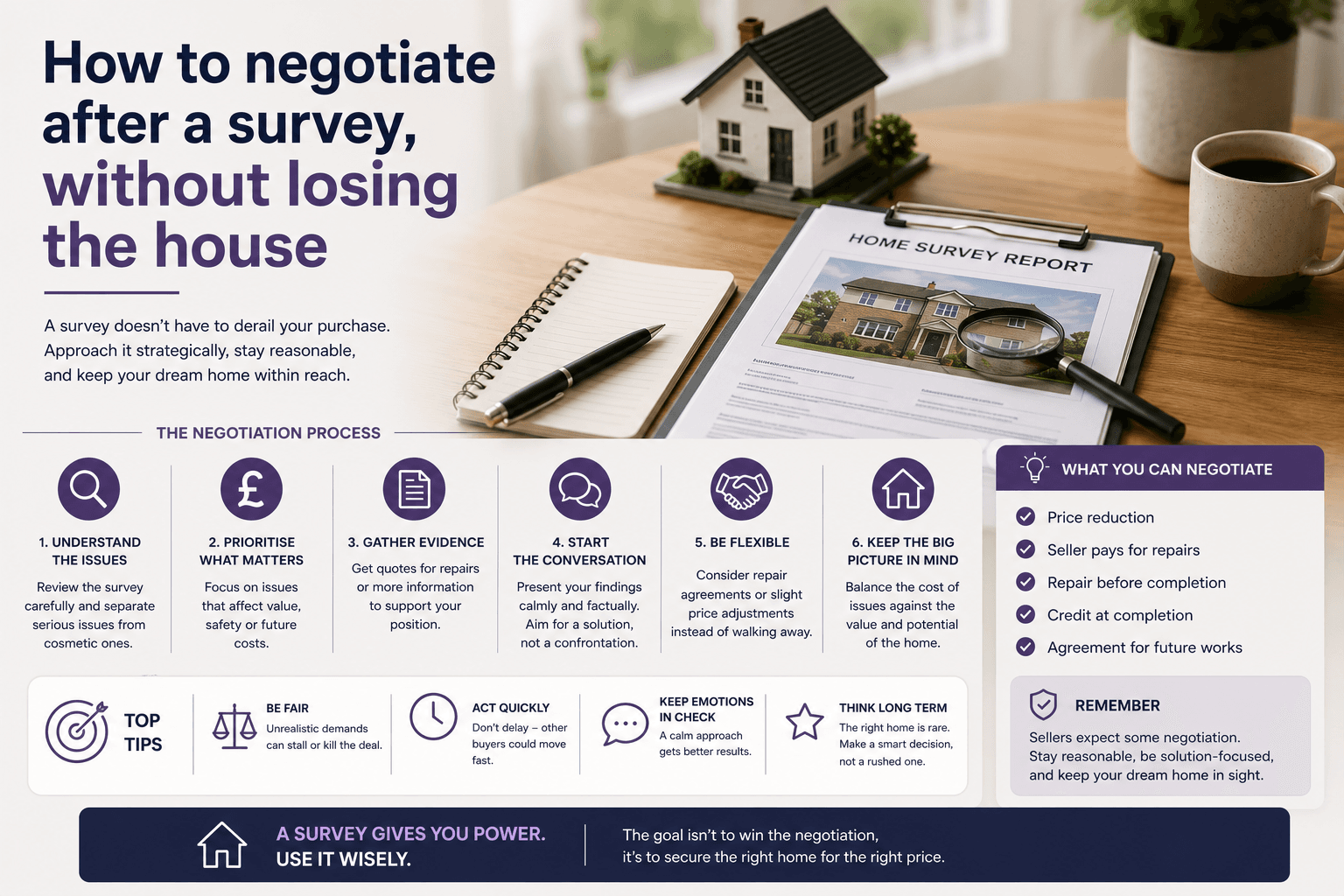
Why evidence beats emotion, every time
A renegotiation conversation succeeds or fails on one thing: whether you turn up with a number, or with a feeling. “This survey found some worrying things” gets a vague response. “This survey found £4,200 of roof repairs, here's an itemised quote from a roofer, and here's what we'd like to do about it” gets a proper answer, because you've given the other side something concrete to respond to.
This isn't about being aggressive. The buyers who negotiate best are calm, specific and patient — they let the numbers do the arguing.
The process, step by step
How much of a reduction is reasonable?
As a rule of thumb, ask for the cost of the repair, not a multiple of it. Asking for the exact quoted figure (or close to it) is hard to argue against; asking for double “to cover the inconvenience” invites the vendor to dig in. If there are several findings, present them as a single consolidated figure rather than negotiating each one separately — it's faster and it looks more considered.
Vendors are, in our experience, more willing to accept a price reduction than to organise the repair work themselves before completion, because it removes them from the process entirely. If your ask is a repair rather than a reduction, be prepared for more back-and-forth on timing and choice of contractor.
“The buyers who get the best outcomes aren't the toughest negotiators — they're the best-prepared ones. A quote in hand beats a strong opinion every time.”
Your follow-up call is included — use it to turn the report into a clear, specific ask.
If the vendor pushes back
A first “no” from the estate agent is often a negotiating position, not a final answer — hold yours politely and let the deadline do its work. If the vendor genuinely won't move, decide in advance what your walk-away point is, based on the numbers rather than how invested you feel in the house. Most transactions we advise on complete; the ones that don't are usually where the true cost of the finding was simply larger than either side could bridge.
Whatever the outcome, keep your solicitor informed throughout — an agreed reduction or repair needs to be reflected in the contract, not just in an email exchange with the agent.
Three ready-to-adapt templates: the initial ask, the follow-up, and the final position.